
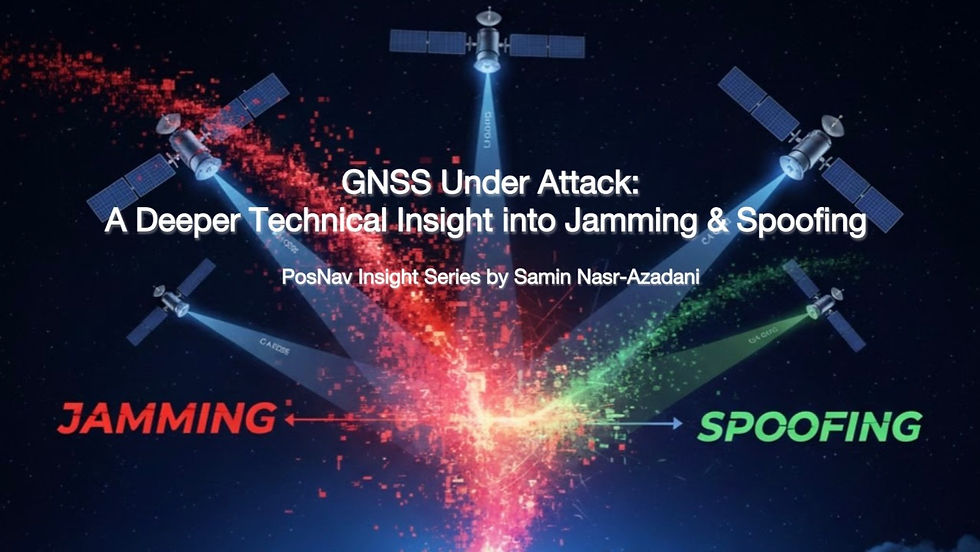
🌐GNSS Under Attack; A Deeper Technical Insight into Jamming & Spoofing
- Samin Nasr-azadani
- Nov 23, 2025
- 1 min read
Global Navigation Satellite Systems (GNSS) appear to be “high-precision positioning systems” but at their core they rely on extremely weak, easily manipulated signals. The received power of a GPS L1 signal at ground level is roughly −130 dBm, meaning the receiver is essentially trying to detect “a signal with nearly zero power” through atmospheric attenuation, ionospheric delay, and system noise.
This single fact explains why Jamming and Spoofing can have such profound effects on positioning and navigation. Most of us have at some point seen our GPS stop working, signal warnings appear, or the system suddenly lose track of the route. But how does this actually happen?
If you have recently experienced GNSS interference, or want a deeper technical understanding of how Jamming and Spoofing work, this article breaks the mechanisms down clearly and in depth.


Comments